Some experiences quietly reshape the way we see the world. For me, one of those experiences was my first February in Rethymno. Arriving in 2002, I expected a charming Cretan town and perhaps a lively festival. What I discovered instead was a city vibrating with creativity, emotion, and collective joy — a Carnival that turns everyday life upside down and pulls everyone into its magic.
What struck me most was not the floats, as spectacular as they were. It was the people. You could feel, almost physically, how much love and personal effort had gone into every single costume, every painted papier-mâché head, every satirical banner. The whole city had been living for this for months. Mothers, fathers, children, grandparents, artists, mechanics, teachers — all of them working together, dreaming together, building something together. For a few magical days, the problems of everyday life simply ceased to exist. And I have been in love with it ever since.
So it feels only natural to write about this — the story of Carnival in Rethymno and in the world. Where it came from, what it means, and why, more than 2,000 years after its ancient ancestors, it still has the power to make an entire city feel alive.
The Ancient Roots — Dionysus and the Birth of Festivity
The Carnival as we know it today did not appear from nowhere. Its roots stretch back thousands of years, to the ancient world’s understanding of the cycles of nature, the seasons, and the human need to periodically overturn the established order.
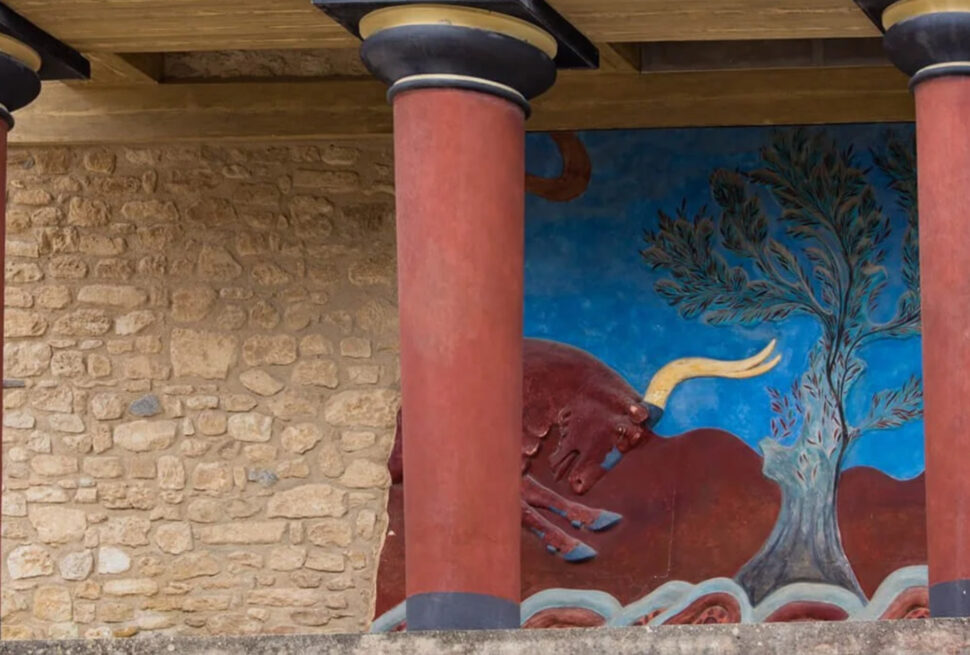
In ancient Greece, the most important ancestor of Carnival was the Dionysia— a series of great festivals held in honor of Dionysus, the god of wine, fertility, ecstasy, and transformation. These were not quiet affairs. They involved feasting, dancing, theatrical processions, and rituals designed to welcome the return of spring and drive out the spirits of winter. Men dressed as Satyrs, wild and laughing creatures, and women as Maenads — ecstatic followers of the god. The wearing of masks, of disguises, of costumes that let a person become someone else entirely: this is where many of its essential elements take shape.
The Great Dionysia in Athens was also the birthplace of Western theatre itself. Comedy and tragedy were performed competitively before enormous crowds — and that spirit of satire, of holding a mirror up to society and making people laugh at the powerful, is very much alive today in the floats of the Rethymno Carnival.
Athens also held the Kronia, a festival honoring the god Kronos, which became a strong influence on the Roman Saturnalia — one of the most important ancestors of modern Carnival. During Saturnalia, the normal social order was turned upside down: gambling was permitted, masters sat at the same table as their slaves and even served them food, and a “King of Misrule” was elected to preside over the chaos. He is the direct ancestor of the Carnival King who is still burned symbolically at the close of the Rethymno Carnival every year, marking the end of the festive season and the return of the ordinary world.
The meaning runs deep. Carnival, across all its ancient forms, represented a period of symbolic renewal — chaos temporarily replacing the established order, so that when the festivities ended, the world could begin again, refreshed and renewed. The mask was central to this. In ancient Greek drama, clay masks allowed actors to become other people, to lose their serious everyday selves, to speak truths that could not otherwise be spoken. The carnival mask carries that ancient freedom to this day.
The Christian Transformation — When the Church Embraced the Festival
As the Roman Empire adopted Christianity, the Church faced a challenge. Wherever it spread, it found people who did not want to give up their ancient celebrations. And so, rather than erasing these traditions by force, the Church gave them new Christian meaning — moving the pre-spring feasting into the weeks before Lent, creating a sanctioned period of indulgence before forty days of fasting and reflection.
This is where our word “Carnival” comes from. The Latin carne vale — “farewell to meat” — or *carnem levare*, “to put away flesh.” In Greek, the equivalent is Apokries, which literally means the same thing: no more meat. It is the final feast before the fast. The ancient rites of Dionysus and Saturn were not erased — they were baptized, given a Christian name, and sent out into the world anew.
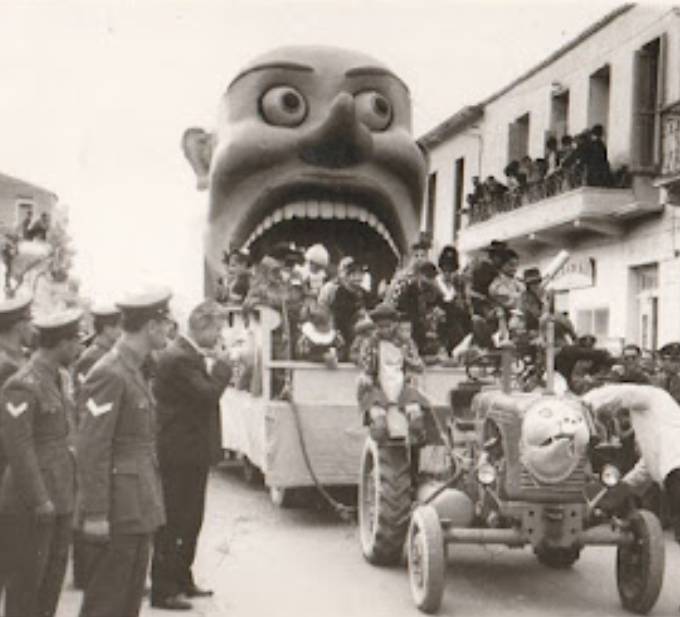
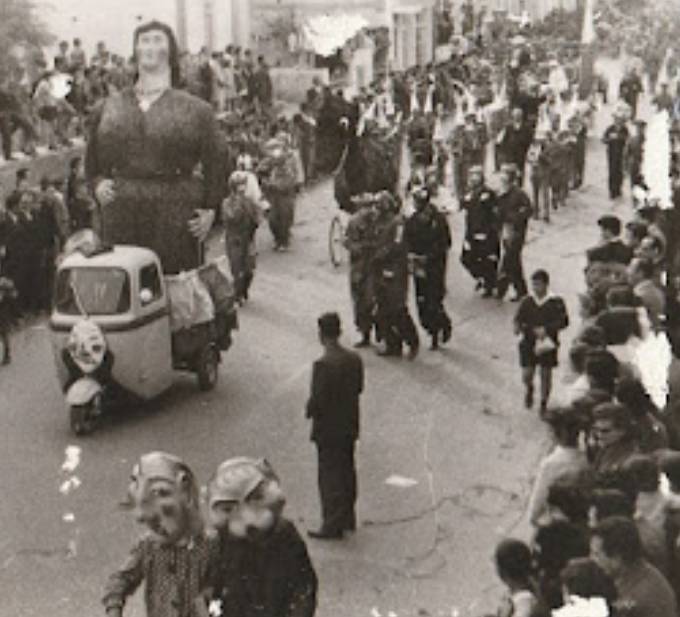
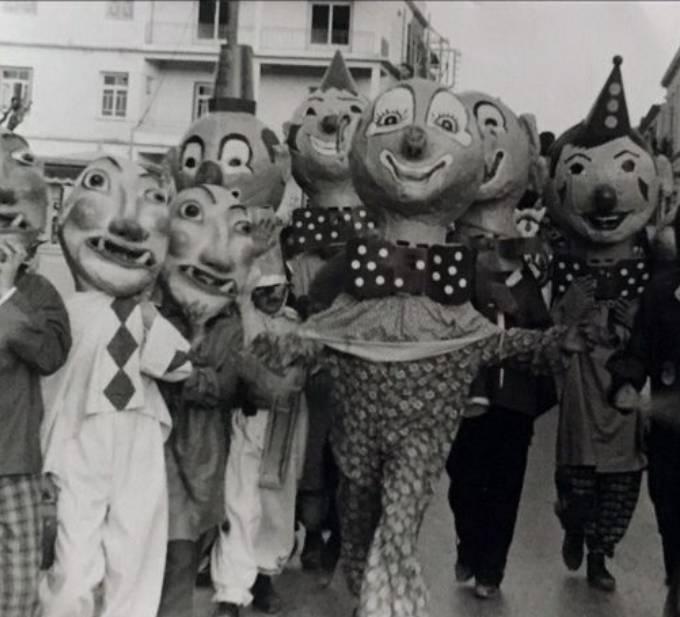
Photo -https://rethymnocarnival.gr/
Carnival Around the World — A Universal Human Need
What is remarkable about Carnival is that the impulse behind it — to celebrate, to wear a mask, to temporarily escape your ordinary self, to mark the turn of the season with joy and laughter — is not unique to Greece or Europe. It appears across the globe, in cultures that had no contact with one another, because it answers something deeply human.
Brazil — Rio Carnival is the most famous in the world, drawing millions of visitors each year and combining African, Indigenous, and European traditions into a spectacular celebration of samba, color, and creativity.
Venice, Italy carries one of the most ancient and refined carnival traditions in Europe — famous for its elegant masks and elaborate masquerade balls, rooted in the opulence of the Venetian Republic. Rethymno itself was under Venetian rule for nearly four centuries, and Venice’s deep love of the masquerade left a permanent imprint on the city’s culture and DNA.
Trinidad and Tobago holds what many call “the greatest show on Earth” — an explosive street celebration blending African, Indian, and European influences into calypso, color, and dance.
New Orleans — Mardi Gras carries French Catholic roots, with parades, beads, masks, and the King Cake connecting the city to its Creole and colonial past.
In Hungary, the Busójárás sees locals dress in terrifying woolly costumes and carved wooden masks, making enormous noise to drive away winter — an echo of the same ancient impulse that once animated the festivals of Dionysus.
And in Greece itself alongside Rethymno, the ancient Ragoutsaria festival of Kastoria may date back to antiquity — a celebration of nature’s rebirth with brass bands, Macedonian drums, and mass participation that connects modern Greeks directly to their pre-Christian ancestors.
Rethymno — Where Ancient Greece Meets Venice
Rethymno occupies a uniquely special place in this global story. The city was under Venetian rule from 1210 to 1645 — nearly four centuries during which masquerades and festive processions became woven into the fabric of daily life. The Venetians, lovers of spectacle and ceremony, encouraged the traditions they brought with them, and those traditions fused with the ancient Greek carnival spirit that was already in the blood of Cretan people.
This layered inheritance — ancient Greek, Byzantine Christian, and Venetian — gives the Rethymno Carnival a cultural depth that few events anywhere in the world can match. When you watch the parade, you are not just watching a festival. You are watching the accumulated memory of three civilizations.
The earliest documented carnival activity in Rethymno dates to 1883, when private masked balls began to be held in family homes. By 1914, the festivities had spilled into the streets, with costumed locals welcoming “His Excellency King Carnival amid the uncontrollable laughter of the crowds” — a delightfully Dionysian image that would not have seemed out of place in ancient Athens.
A Living Institution — The Organized Carnival
The first properly organized Carnival began in the early 1960s, led by the Rethymno Touring Club, founded in 1958. The Club ran the event for more than twenty years, producing historically themed floats, spectacular costumes, and the famous “Kefales” — enormous, elaborately crafted papier-mâché heads that became the beloved symbol of the Carnival. The Club gave the event its soul: serious artistry, community spirit, and a sharp satirical wit directed at those in power — a tradition as old as the Dionysia itself.
In the mid-1980s, the Carnival was suspended for lack of financial support. The silence must have been strange for a city that had danced for decades.
But cities like Rethymno do not stay silent for long. In the early 1990s, a Treasure Hunt brought people back together, and the creative groups that formed around it became the engine of revival. In 1993, the Municipality of Rethymno officially took over the organization, inviting these groups to lead the creative work while providing institutional and financial support. Since then, the Carnival has never looked back.
In 2017, the world took formal notice: Rethymno entered the Guinness Book of World Records when 1,384 people competed in the Treasure Hunt, eclipsing the previous record held by the University of Newcastle in England. Today, the Carnival is a proud member of the FECC — the Federation of European and Latin American Carnival Cities — placing Rethymno officially among the great carnival cities of the world.
Days of Madness and Magic — What Actually Happens
Here is what I love most about the Rethymno Carnival: it is not a single event. It is a whole season, a whole way of life that takes over the city for weeks.
The festivities build and build, with parties, masquerade balls, and events filling the streets and venues of Rethymno many days before the grand finale. This extended celebration is a huge part of what makes it so special — and so economically important. Hotels fill up, restaurants overflow, shops come alive. People travel from all over Greece and from countries across Europe and the world, drawn by the reputation of something they know they cannot experience quite like this anywhere else. For the local economy, the Carnival is not just a cultural event — it is a lifeline that extends the tourist season deep into February, when the rest of Greece is quiet.
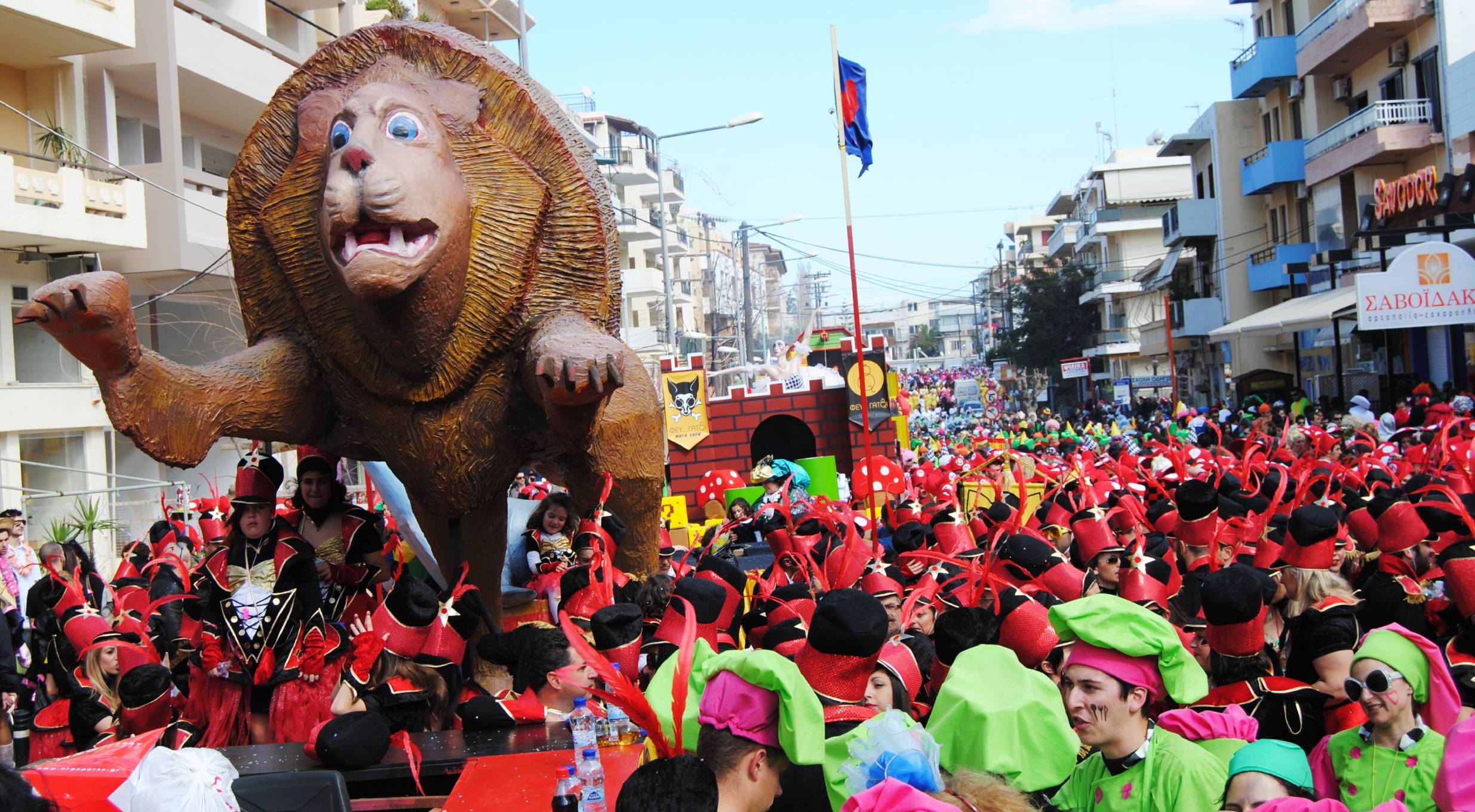
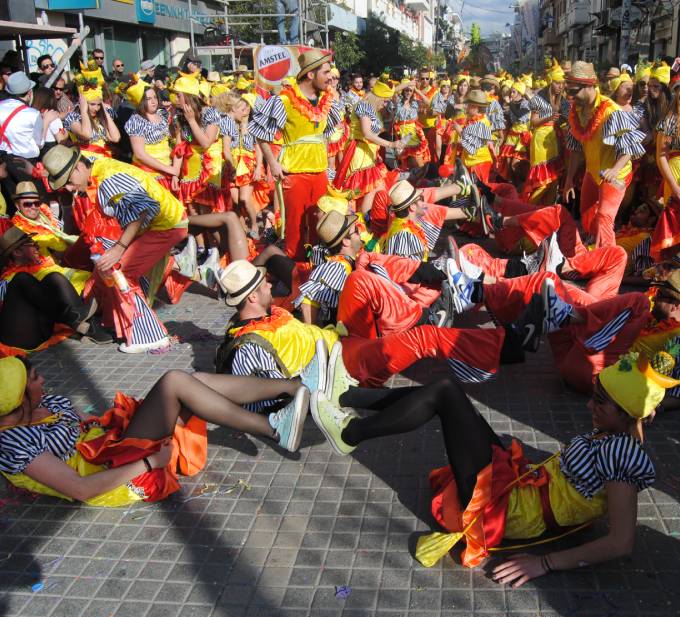
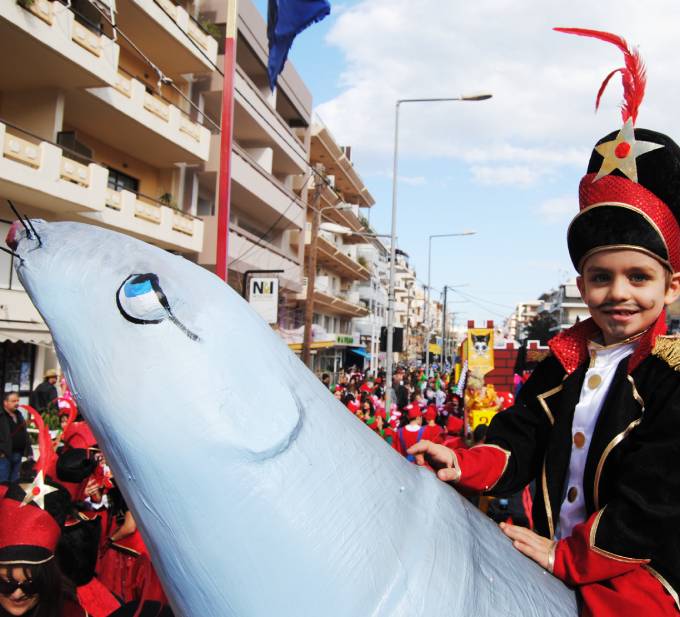
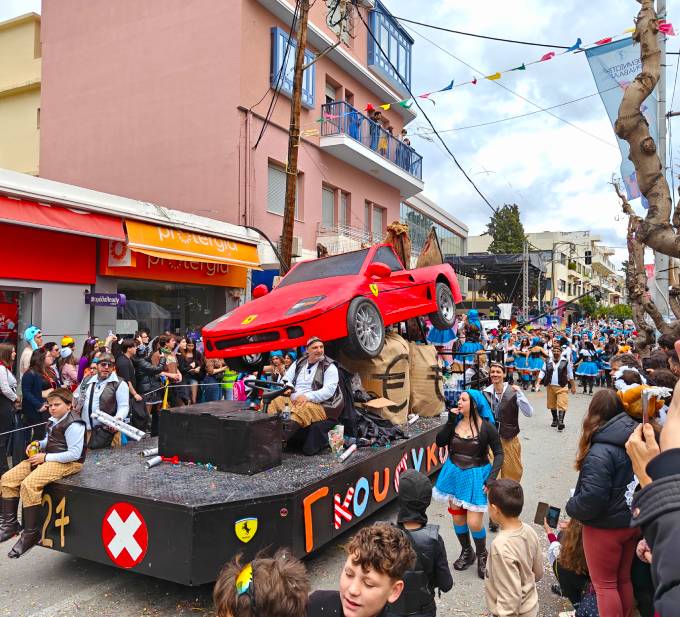
Then come the three great processions that form the heart of it all. On Saturday afternoon, the Children’s Parade fills the streets with thousands of the smallest carnival participants — tiny knights and fairies and pirates and superheroes, marching with enormous seriousness and melting the hearts of everyone watching. Later that same Saturday evening, the city comes alive again for the night parade, when the mood shifts — more theatrical, more dramatic, lit by spotlights and the energy of a crowd that has been building toward this moment all week. And then comes Sunday — the main event, the Grand Parade. This is what people travel from across the world to see. Dozens of elaborately crafted floats, built over months by community groups with extraordinary dedication, roll through the streets of old Rethymno. Some carry sharp political satire. Some are surreal fantasies. Some are simply breathtaking works of art. Nearly 12,000 participants in costumes dance alongside them, filling every corner of the city with color and music. The crowd watching from the sidelines numbers in the tens of thousands. And when the last float passes and evening arrives, the Carnival King is ceremonially burned — and the city exhales, and the world returns.
The Soul of It All
I keep asking myself what makes the Rethymno Carnival different from so many other large festivals. And I keep coming back to the same answer: it is still, at its heart, a celebration made by the people, for the people — even as it continues to grow, evolve, and professionalize.
In earlier decades, almost everything was created entirely by the carnival groups themselves. Costumes were sewn at home, masks were sculpted and painted in improvised workshops, and every detail was shaped by the hands of neighbors and friends working late into the night. Today, the scale of the Carnival has become so large that professional artists and specialized workshops now play an important role, especially in the construction of large floats and elaborate masks. This evolution is natural. A festival of this size simply cannot exist without organization, technical expertise, and professional craftsmanship.
And yet, what truly defines the Rethymno Carnival has not changed. Behind every group stands months of voluntary work, endless meetings, creative debates, fundraising efforts, rehearsals, and collective dreaming. The organizers, dancers, designers, and volunteers still give countless unpaid hours, driven by passion, pride, and love for the celebration. The professional structures support the vision — but the soul still belongs to the people.
When you stand and watch the parade, you are witnessing the result of thousands of hours of shared effort. No budget alone can create this atmosphere. No production company can manufacture this sense of belonging. It remains, in its deepest essence, a gift from the people of Rethymno to themselves — and to everyone lucky enough to be there.
For a few extraordinary days each year, visitors from all over the world come to forget their everyday worries, to laugh, to dance, to wear a mask and become someone else for a while — exactly as people have done since the first followers of Dionysus took to the streets of ancient Athens, celebrating the return of spring and the irrepressible human joy of being alive.
The Carnival is its people. It is the people who carry the dream forward, who organize, who create, who adapt, and who continue to give it their soul year after year. As someone who has watched this transformation unfold for more than two decades, I can say this with certainty: the organization of the Rethymno Carnival is not just impressive. It is deeply moving.
And if you have never been — go. Go at least once. You will understand everything the moment you arrive.
The Rethymno Carnival Grand Parade takes place annually on the Sunday before Clean Monday, the beginning of Greek Orthodox Lent. For dates and program, visit
rethymnocarnival.gr